Selected engineering work / Case study
Food Checker
From label photo to an accountable result, across the whole system.
An iOS app that reads the ingredients on a food label and flags the ones you choose to watch for. I built the whole path behind it: the camera workflow, OCR and configurable ingredient rules, a hardened FastAPI service, Supabase-backed account and data flows, automated AWS releases and private monitoring.
Beta software; see the product boundary below.
Stack facts
Pre-release build
- Mobile client
- Expo / React Native
- Analysis API
- FastAPI + Tesseract OCR
- Data and auth
- Supabase / PostgreSQL
- Delivery
- GitHub Actions + ECR + SSM
- Infrastructure
- Terraform + Ansible
Informational only. Not medical, allergy or dietary advice.
Project summary
- What it is
- An iOS ingredient-label scanner backed by a FastAPI OCR service on AWS. Pre-release, in TestFlight beta.
- What I built
- The whole path from photo to result: the API and OCR pipeline, AWS infrastructure, automated releases and monitoring, plus the mobile client.
- Key engineering
- Credential-light releases through GitHub Actions, OIDC and SSM, verified by a post-deploy health check and a real analysis request.
- Evidence here
- App screens, a June 2026 private-dashboard snapshot, CI and release checks, and the privacy, support and terms pages.
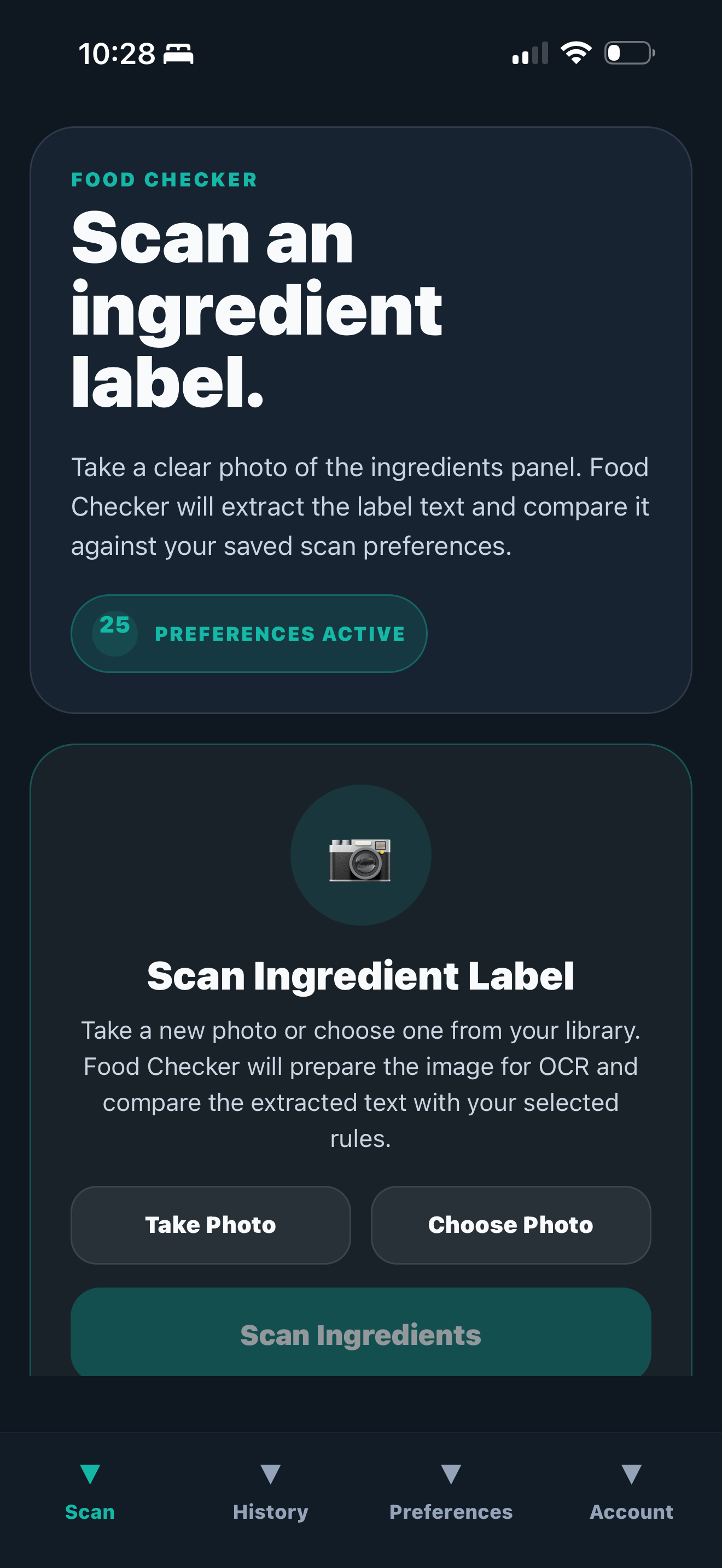
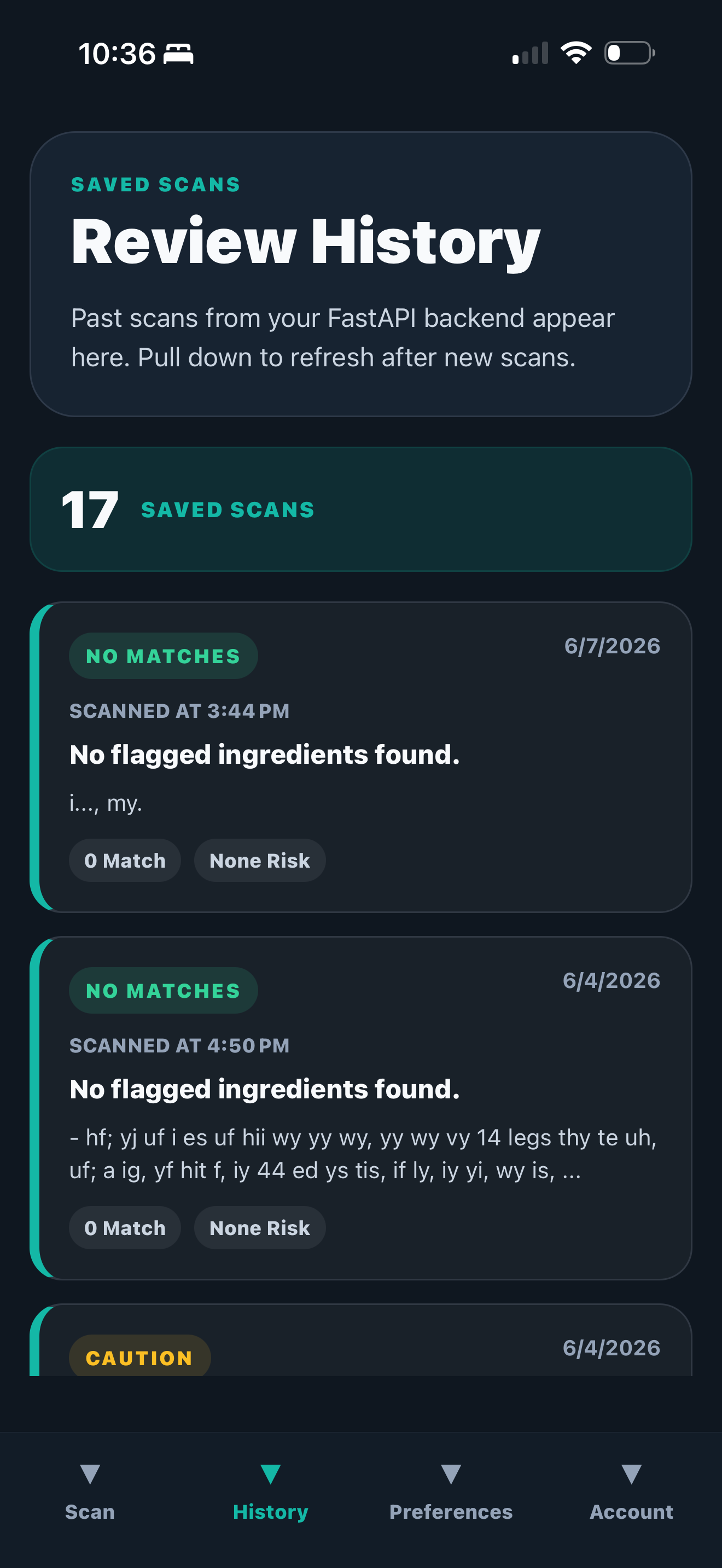
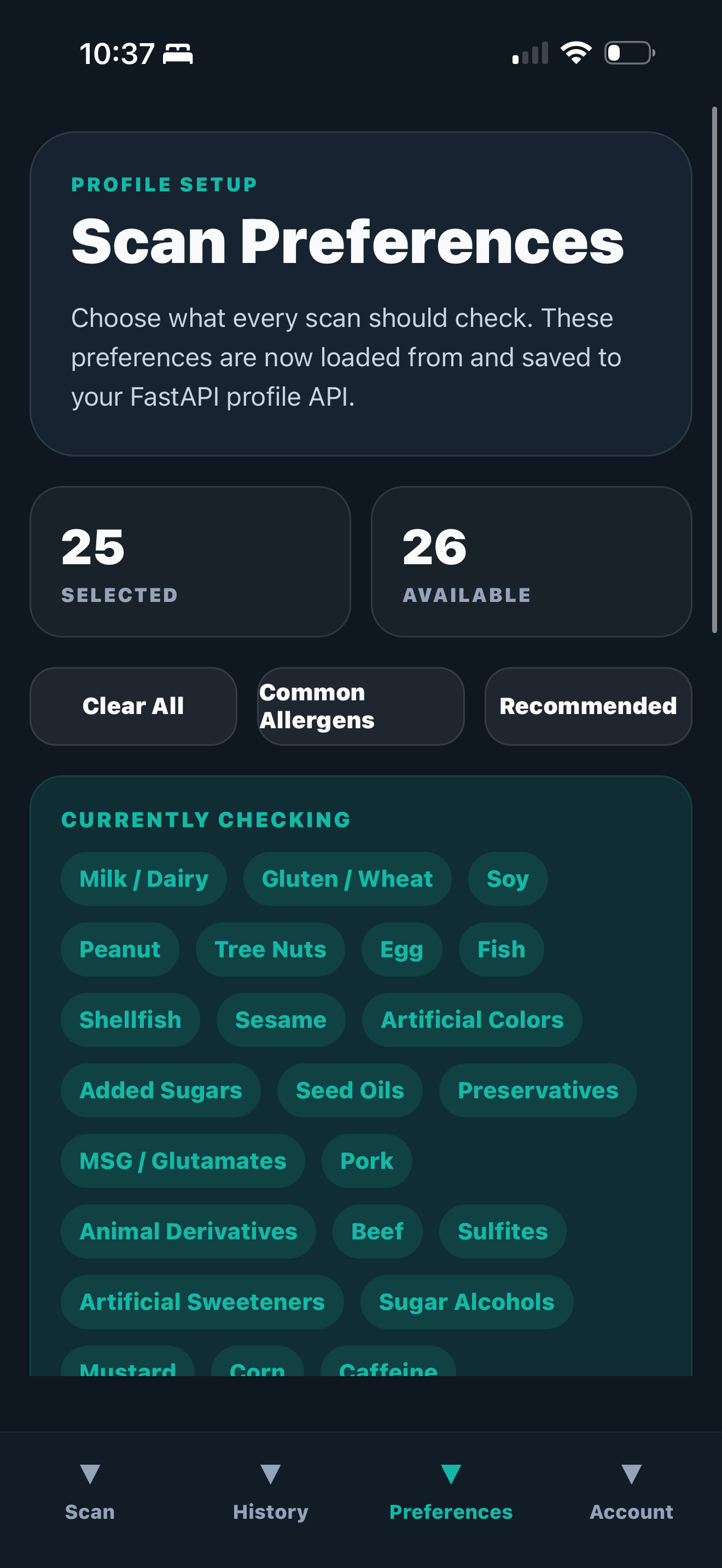
01 · Mobile workflowScan, review, correct the input.
The mobile client is the entry point, but not the whole system. It collects a label, presents structured results, and gives users control over the rules applied to each scan.
02 · Analysis pipelineA bounded path from image to result.
Each stage is explicit so failures can be validated, logged and explained instead of collapsing into a generic scan error.
- 01Label photoCamera or library input
- 02Validate + preprocessType, size, cleanup
- 03Tesseract OCRExtract ingredient text
- 04Normalize + apply rulesUser-selected concerns
- 05Structured resultRisk, summary, matches
03 · System boundariesPublic use, controlled delivery, private observation.
The architecture separates what the app needs publicly from what operators need privately, while keeping deployment access reviewable and short-lived.
Application path
- 01Expo / React NativeiOS client
- 02Caddy HTTPSPublic reverse proxy
- 03FastAPILocalhost container
- 04SupabaseAuth and PostgreSQL
Release path
- 01GitHub ActionsChecks + image build
- 02AWS OIDCShort-lived auth
- 03Amazon ECRVersioned image
- 04AWS SSMRun Command deploy
- 05EC2 ComposePull, restart, verify
Observability path
- 01FastAPI metricsRequest and service signals
- 02PrometheusPrivate collection
- 03GrafanaPrivate tunnel access
Terraform provisions AWS access and infrastructure. Ansible establishes the host baseline. Caddy and Docker Compose own the runtime boundary.
04 · API and release hardeningTrust behavior, not a green process light.
Traceable requests
X-Request-ID, method, path, status and duration make API failures easier to follow without exposing sensitive internals.
Safer uploads
MIME checks, size limits, temporary-file cleanup, OCR timeout handling and clear unreadable-label errors bound the scan path.
Closed raw API access
FastAPI binds to 127.0.0.1:8000. Public traffic reaches it through Caddy and HTTPS; the raw port is not exposed.
Credential-light delivery
GitHub Actions uses AWS OIDC and SSM rather than long-lived cloud keys or SSH as the default deploy path.
Behavioral deploy check
Releases verify both
/healthand a knownPOST /analyzerequest before the workflow treats deployment as successful.Capacity discovered through monitoring
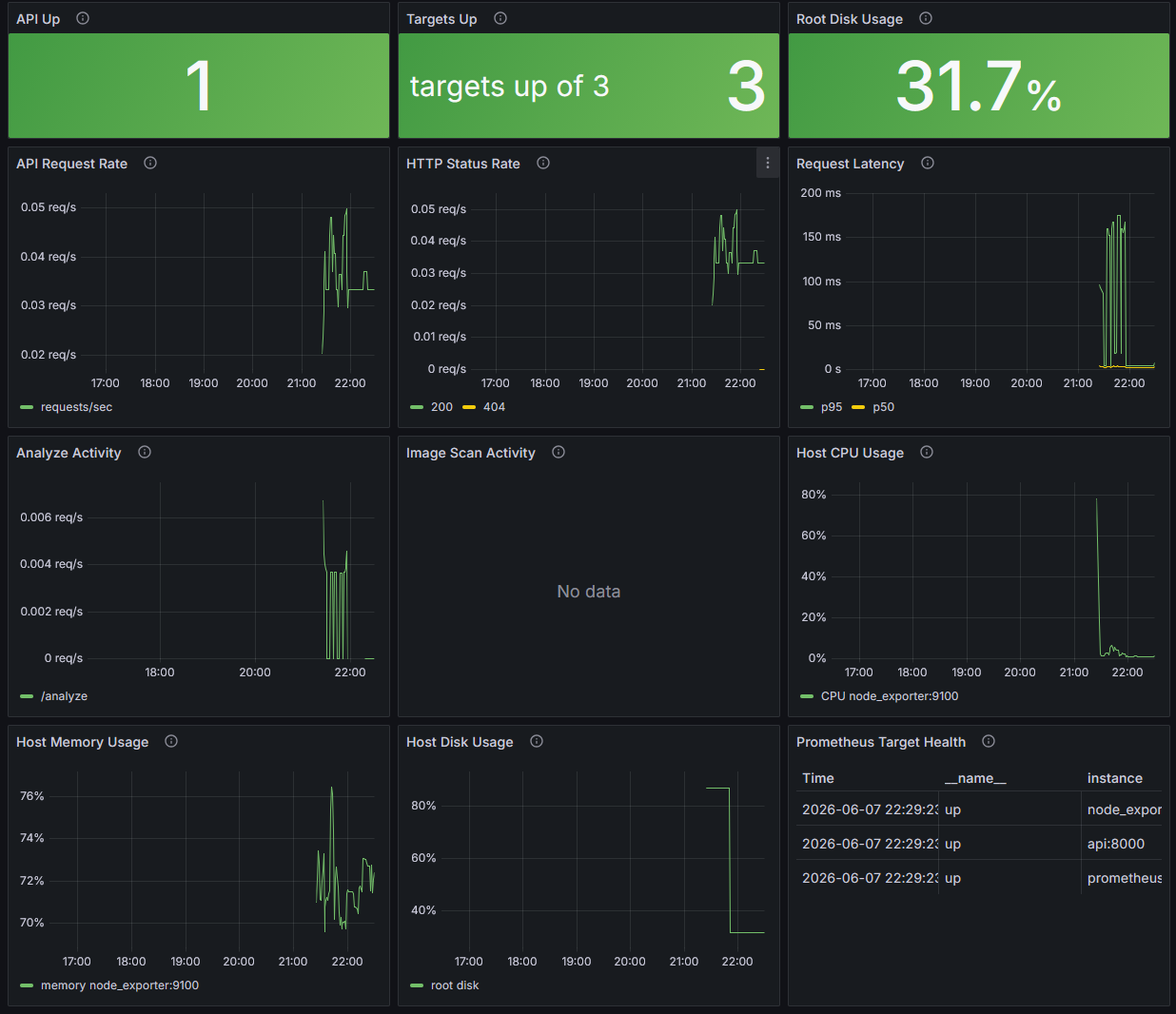
Disk pressure led to cleanup, shorter Prometheus retention, and expansion of the root volume from 8 GiB to 20 GiB.
05 · Operational evidencePrivate monitoring, public explanation.
Grafana itself remains off the public internet. This snapshot documents the signals used to understand service state, request behavior, target health and host capacity.
06 · Release confidenceChecks at each delivery boundary.
- Backend CI
- FastAPI import and pytest across analyzer, auth, OCR, upload and API smoke behavior.
- Mobile CI
npm ci, Expo public config validation, TypeScript typecheck and lint.- Runtime image
- Production dependencies stay separate from test tooling before the image is pushed to ECR.
- Post-deploy
- Health plus a synthetic ingredient-analysis request verify the deployed behavior.
Stable product linksApp Store and beta metadata.
These URLs remain stable for App Store Connect and TestFlight.
Expo · React Native · iOS · TypeScript · FastAPI · Tesseract OCR · Pillow · Supabase · PostgreSQL · Docker · ECR · Terraform · Ansible · GitHub Actions OIDC · AWS SSM · EC2 · Caddy · Prometheus · Grafana
That is the selected work. Back to the beginning, or get in touch.